

Inside the ALGOP Steering Committee Vote, and Why It Matters
As questions surrounding the eligibility of Nehemiah Wahl, political alias “John” Wahl, moved beyond local party channels, the matter ultimately came before the Alabama Republican Party Steering Committee.
The committee was tasked with deciding whether to hear a ballot challenge involving Mr. Wahl. According to information provided, the vote resulted in a tie 9-9. Under standard procedure, the Chair does not vote during Steering Committee proceedings and only votes to break a tie. Chairwoman Joan Reynolds did not vote on any of the other candidate matters considered during the call. However, she did cast the deciding vote to break a nine to nine tie on whether to hear the challenge involving Mr. Wahl.
That single vote determined the outcome.
With the Chair’s tie breaking vote, the Steering Committee declined to hear the challenge. As a result, Mr. Wahl will remain on the ballot without a formal hearing.
What the Challenge Was Actually About
From the beginning, this issue was never simply about residency. The core concern raised was the legality and process by which one individual appeared to be registered to vote in two different states under two different names. Public records showed the legal name appearing on voter registration in Tennessee, while a political alias appeared on voter registration in Alabama since 2012, the same state where he is now seeking the office of Lieutenant Governor.
Residency questions are common in political disputes and are often resolved through timelines and documentation. What raised concern in this case was the existence of voter registrations under different names across state lines, combined with the requirement that voter registration applications are sworn documents submitted under penalty of law.
For an ordinary citizen, registering to vote in two states under two different names would raise immediate legal and procedural questions. For a candidate seeking statewide executive office, those questions are heightened.
This distinction matters because it clarifies what was actually presented for review and what was ultimately declined from advancing.
Prior Notice of Broader Concerns
Approximately one year before the Steering Committee vote, at least two members of the committee were notified of concerns that extended beyond residency alone. Those concerns included questions related to identity, business practice and conflicts, and voter registration under different names.
These issues were not raised suddenly or without warning. They were communicated well in advance of the formal ballot challenge process.
Despite that prior notice, the same issues later came before the Steering Committee for an official vote, with some of the individuals previously informed now participating in the decision making process.
This sequence matters because it speaks to whether meaningful separation existed between those raising concerns and those charged with evaluating them.
The Vote and Who Decided the Outcome
Because the vote was evenly split, the outcome rested entirely with the Chair.
The following members voted against holding a hearing on the ballot challenge, resulting in Mr. Wahl remaining on the ballot
Josh Dodd, Regional Chairman, Districts 4,5
Vicki Drummond, National Committeewoman
Ben Harrison, District 5 Chair
Carol Jahns, Secretary of the Alabama Republican Party
Riley McArdle, Chairman of the College Republican Federation of Alabama
Tiffany Noel, President of the Alabama Federation of Republican Women
Reed Phillips, Treasurer
Bonnie Sachs, District 4 Chair
George Williams, Chairman of the Alabama Minority GOP
Joan Reynolds, Chairwoman of the Alabama Republican Party
That leaves following members voted in favor of advancing the challenge to a hearing:
Bill Harris, National Committeeman
Alex Reynolds, Regional Chairman Districts 1 and 2
Renèe Gentle Powers, Regional Chairman Districts 3, 6, and 7
Jackie Gay, District 1
William Rayborn, District 2
Joe Lovvorn, District 3 Chair
Chris Brown, District 6 Chair
Vaughn Poe, District 7 Chair
Stephanie Petelos, Chairman of the Young Republican Federation of Alabama
Krystal Drummond, Finance Chair
The vote ended in a nine to nine tie, with nine members voting against advancing the challenge to a hearing. While not all committee members participated, no explanation has been provided regarding nonparticipation. Several participating members had documented connections to the candidate, raising questions about whether recusal standards were appropriately applied.
Disclosures and the Question of Recusal
Public disclosures provide additional context for evaluating how this vote unfolded.
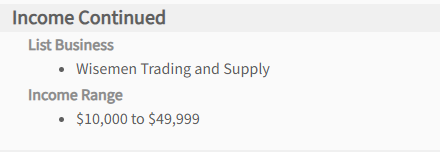
According to Ben Harrison’s Statement of Economic Interest, he is a long standing employee of the Wahl family business, Wisemen Trading and Supply. In addition, Mr. Harrison used the Wahl family consulting firm in connection with his own campaign activities. Despite these ongoing professional relationships, Mr. Harrison participated in the vote on whether to hear the challenge involving Mr. Wahl.







Riley McArdle and Reed Phillips also participated in the vote despite involvement with partisan political campaigns. McArdle is currently working on Barry Moore’s campaign and Phillips is currently a political consultant.
Based on commonly accepted standards of ethical conduct in public service, steering committee members are generally expected to recuse themselves from votes where campaign involvement or ongoing professional relationships could reasonably raise questions about impartiality. This expectation exists to preserve public confidence in the integrity of the decision making process, even when no direct financial conflict is alleged.
Whether or not intent is disputed, participation under these circumstances creates the appearance of conflicted decision making that recusal standards are designed to prevent.
Because the vote was evenly split, the participation of members with potential conflicts directly affected the outcome. Had proper recusals occurred, the challenge would have advanced to a hearing rather than ending at the Steering Committee level.
What the Process Reveals
When viewed as a whole, the Steering Committee vote illustrates more than a procedural decision. It reflects how internal party process’s function when questions arise involving individuals with significant political influence.
Concerns involving voter registration under two different names in two different states were reviewed internally, split evenly among committee members, decided by a single tie breaking vote, and then closed without advancing to independent review.
This dynamic mirrors earlier events at the local level, including the termination of a poll inspector who questioned identification procedures while following training and despite the fact that the voter was never denied the right to vote. In both instances, documented concerns were addressed internally and resolved without independent examination.
The difference was scale, not effect.
What once appeared localized now appears institutional.
Why This Matters
Steering Committee votes are not symbolic. They carry real consequences for candidates, voters, and confidence in the political process.
When questions involving voter registration, identity, and sworn election records are resolved internally without advancing to independent review, transparency depends entirely on trust in the structure making the decision.
When that structure includes overlapping political relationships, professional ties, and prior notice of unresolved concerns, the appearance of insulation becomes unavoidable.
Election integrity depends not only on what a party demands publicly, but on whether those same principles are applied consistently within its own decision making processes.
When internal structures resolve challenges behind closed doors, accountability shifts away from voters and toward centralized control.
Public confidence depends not only on whether rules are followed, but on whether they are applied equally and examined openly when challenged.
The United States operates as a constitutional republic that depends on transparent processes and meaningful checks on power. When eligibility questions are resolved internally without independent review, public accountability is weakened and decision making shifts away from voters and toward closed systems of control.
Closing
This article does not assert conclusions or assign motive. It documents the issue presented, the process followed, the relationships involved, the vote taken, and the outcome reached.
John Wahl will remain on the ballot.
The challenge has been closed.
The legal and ethical questions raised by the record remain.
Transparency requires more than internal votes. It requires sunlight.
Editor’s Note
This article is based on documented records and publicly available information that raise legitimate questions deserving public explanation.
The issue examined here was never about residency alone. It concerns the legality and process surrounding voter registration under two different names in two different states and how those questions were handled internally by party leadership. All facts referenced are supported by records or firsthand accounts tied directly to those records.
This reporting does not assign intent or allege wrongdoing. It documents the process, the structure of decision making, and the outcome. Where questions remain unanswered, they are presented so readers can evaluate the information themselves.
Transparency and equal application of the law are essential to public trust. The purpose of this article is to present the paper trail as it exists and to explain why the outcome of this process matters.
